
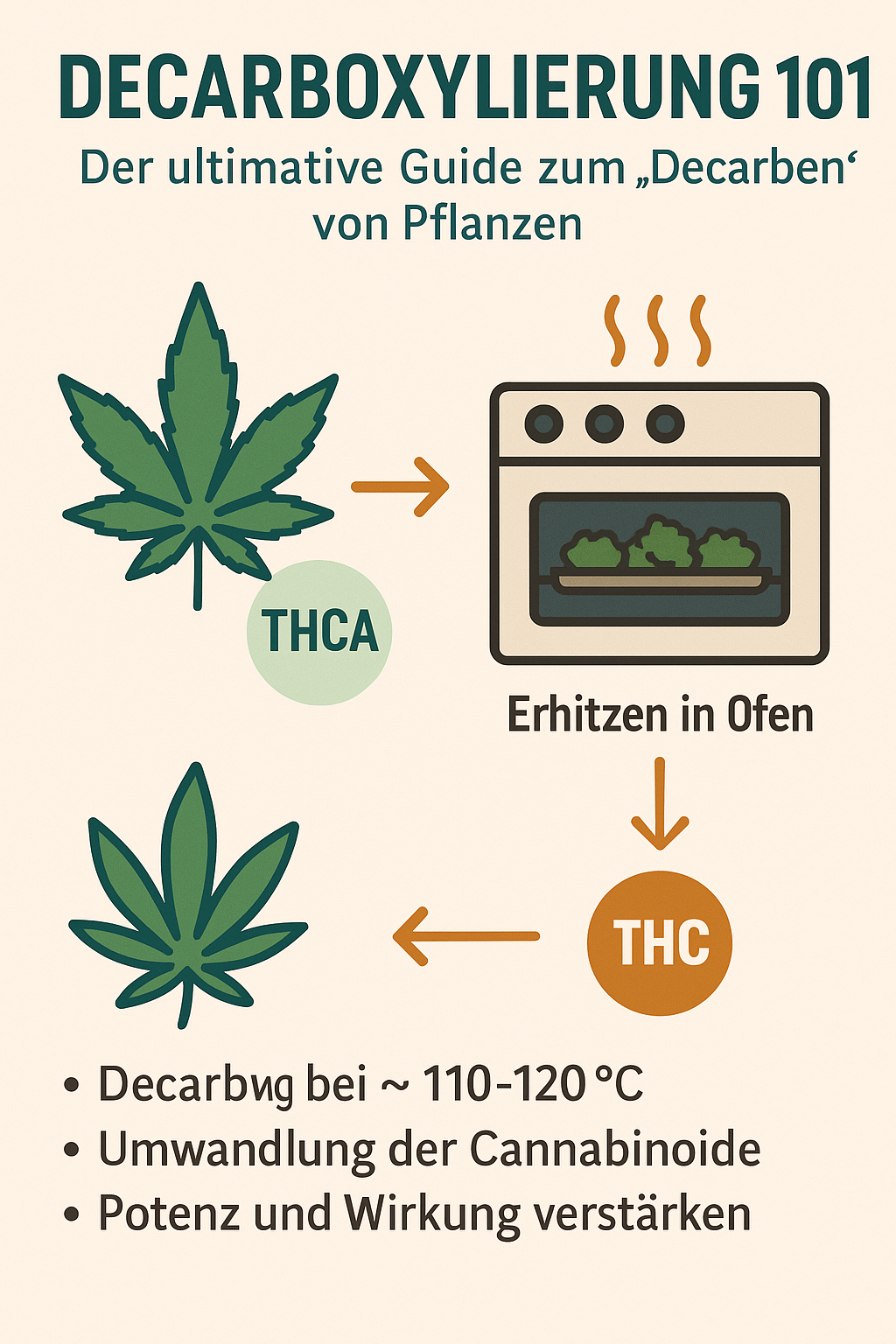
Decarboxylation is a crucial step if you want to use cannabis in the kitchen, medicinally or recreationally. Without this process, the majority of cannabinoids remain inactive – and the desired high or therapeutic effect does not occur.
In this guide you will learn what decarboxylation is, why it is so important, which temperatures are optimal and how to decarb cannabis step by step at home.
What is decarboxylation?
In raw cannabis, the active ingredients are predominantly present in inactive form:
- THCA (tetrahydrocannabinolic acid)
- CBDA (cannabidiolic acid)
These precursors are not psychoactive. The carboxyl molecule (COOH) is only split off by heat or a long period of time – this produces CO₂ – and the active forms THC and CBD are released.
👉 In short: decarboxylation is what makes cannabis effective in the first place.
Why decarben?
- For edibles and oils: Only activated THC or CBD can be absorbed by the body.
- For medical applications: Decarboxylation is necessary to achieve the desired effects (e.g. pain relief, relaxation).
- For full potency: without decarboxylation, a large proportion of the active ingredients remain unused.
Factors that influence decarboxylation
- Heat: The most important factor – cannabis is activated by heating.
- Time: Depending on the temperature, the process takes between 25 and 45 minutes.
- Moisture: Grass that is too moist heats unevenly.
- Temperature control: Too hot → cannabinoids burn. Too cold → incomplete decarbs.
Step-by-step instructions: Decarbing in the oven
You need:
- Canna flowers
- Oven
- Baking tray + baking paper
- Oven thermometer
- Airtight storage container
Step 1: Preheat the oven
- Set the oven to 105-115 °C (220 °F).
Step 2: Prepare cannabis
- Break the flowers into small pieces or coarsely grind them (not too fine, otherwise they will burn).
Step 3: Spread evenly
- Spread the cannabis out on the baking tray – a flat layer without overlapping.
Step 4: Baking
- Bake for 30-45 minutes. Turn carefully every 10 minutes.
👉 Color: from strong green to golden brown = finished decarbed.
Step 5: Cool & store
- Allow the decarboxylated cannabis to cool and store in an airtight jar or container.
Optimal temperatures for cannabinoids
Cannabinoid temperature Duration
– THC 120 °C ~25 min
– CBD 130 °C ~12 min
– CBG 110 °C ~40 min
👉 Tip: It is better to decarb at a low temperature for a little longer to preserve terpenes (aroma & taste).
Alternative methods
- Sous-vide / slow cooker: cannabis vacuumed at 95 °C in a water bath for 1.5-2 hours → low odor & uniform.
- Decarboxylation devices: e.g. Ardent Nova, which offer precise temperature control.
- Microwave: possible, but very inaccurate → risk of overheating.
Use of decarboxylated cannabis
- Make cannabutter or cannabutter oil (perfect for baking & cooking).
- Prepare tinctures with alcohol.
- Topicals (creams & ointments) for external use.
- Sprinkle directly into food (dose carefully).
Tips for the best results
✅ Patience: Too much heat destroys cannabinoids & terpenes.
Store airtight: light and oxygen break down active ingredients.
✅ Dose small first: Edibles are significantly more potent than smoking.
Conclusion
Decarboxylation is the key to using cannabis to its full effect. With a little patience, the right temperature and a keen eye, you can optimally activate THC and CBD – and create the basis for potent edibles, tinctures or medical applications.
If you want more flavor, you should cook a little longer at a low temperature. If you like it quicker, you can use appliances or the sous vide method.
👉 Conclusion: No edible without decolorization – otherwise it will have zero effect!