
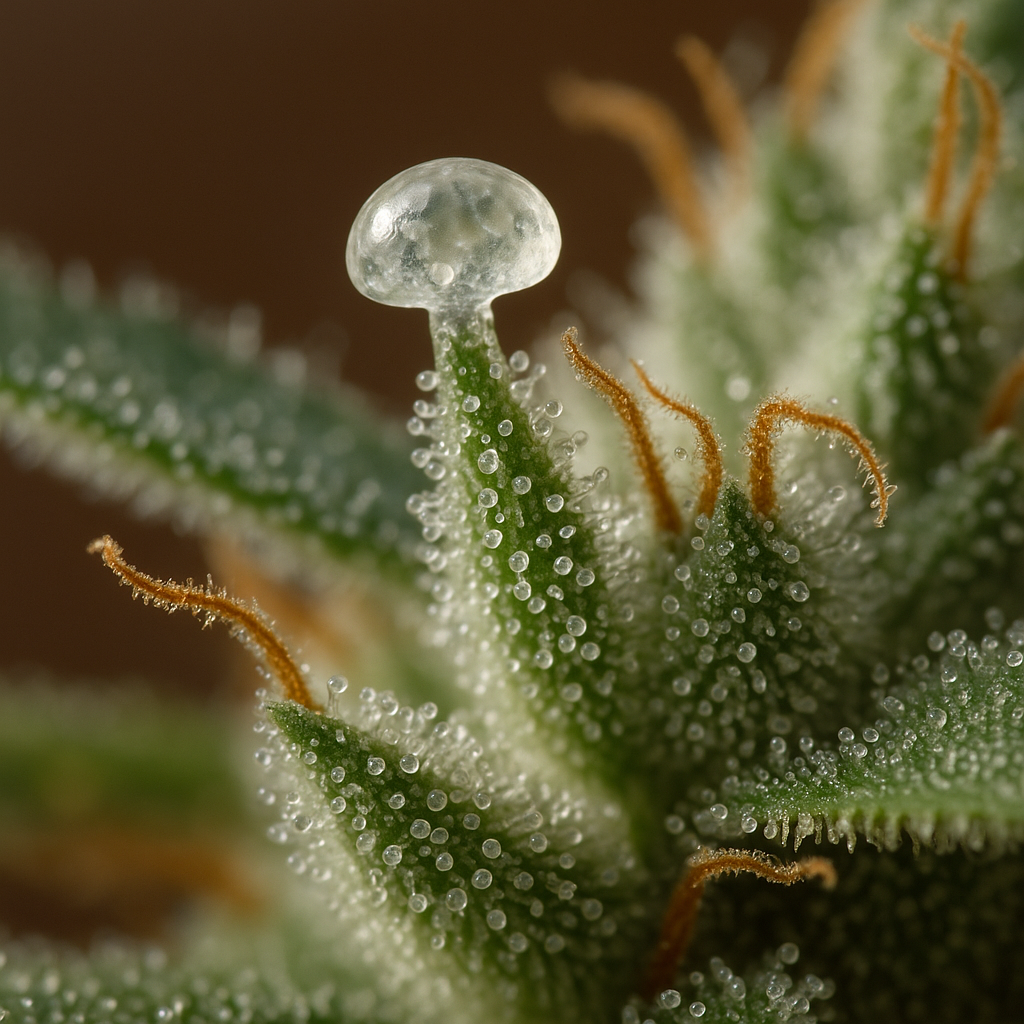
The trichomes of the cannabis plant: where potency and flavor originate
Trichomes are one of the most important parts of the cannabis plant, as they are responsible for the production and storage of valuable cannabinoids and terpenes. These tiny, crystal-like structures play a crucial role in the potency, aroma and medicinal properties of cannabis. In this article, based on the Trinity of Modern Cultivation manual by Treez Tools, we explore what trichomes are, what their functions are and how they affect the quality of cannabis.
What are trichomes?
Trichomes are small, hair-like glands that appear as a sticky, resinous layer on the surface of cannabis flowers, leaves and stems. These microscopic structures are responsible for the production of cannabinoids (such as THC and CBD), terpenes and flavonoids. There are different types of trichomes, but the most important for cannabis cultivation are the glandular trichomes, which are responsible for resin production, which contains the plant’s active compounds
There are three main types of glandular trichomes found on cannabis plants:
Bulbous trichomes: The smallest type, they are difficult to see without a microscope and produce only small amounts of resin.
Capitate sessile trichomes: These trichomes are slightly larger, have a stalk and are therefore more visible. They also produce more cannabinoids.
Capitate Sessile Trichomes: The most common type found on cannabis flowers, they are responsible for producing the highest concentration of cannabinoids and terpenes. They have a stalk and a glandular head that contains the resin.
Functions of trichomes
Trichomes serve as a defense mechanism and reproductive aid for the plant. Their resin is sticky and has a strong odor, which deters herbivores and insects from eating the plant. Trichomes also protect the plant from UV rays and environmental influences. From a grower’s perspective, however, trichomes are most important because they act as the plant’s chemical factories, synthesizing the cannabinoids and terpenes that give cannabis its psychoactive and therapeutic effects.
Importance of trichome development
The quality and quantity of trichomes are crucial indicators of a cannabis plant’s potency and flavor. As described in the Trinity of Modern Cultivation manual, successful trichome development depends on several factors:
Lighting: The right light intensity and light spectrum are crucial for maximizing trichome production. Many growers use UVB light in the flowering phase to stimulate the plant to produce more trichomes.
Nutrients: During the flowering phase, the plant needs a balanced nutrient regime to support resin production.
Humidity and temperature: High humidity can lead to mold growth on the resinous flowers, while lower humidity and cooler temperatures promote optimal trichome development.
Determine the right harvest time
The color of the trichomes is one of the best indicators of the ideal harvest time. Under a microscope, trichomes change from clear to cloudy or amber as the plant matures. Clear trichomes mean that the plant is not yet ready for harvest, while cloudy trichomes signal the peak of THC content. Once the trichomes turn amber in color, THC converts to CBN, resulting in a more sedative effect. By monitoring trichome color, growers can ensure they are achieving the desired potency and effect.
Conclusion
Trichomes are critical to cannabis cultivation, acting as the plant’s chemical factories responsible for producing the compounds that determine the potency, flavor and medicinal properties of cannabis. By understanding trichome development, growers can optimize their cultivation practices to produce high-quality, potent cannabis. As explained in the Trinity of Modern Cultivation handbook, careful monitoring of trichome development is key to harvesting cannabis at its peak potency.